

Please note, the majority of properties on the trail are now private residences,
please respect their privacy.
Methodist Chapel (Wesleyan)
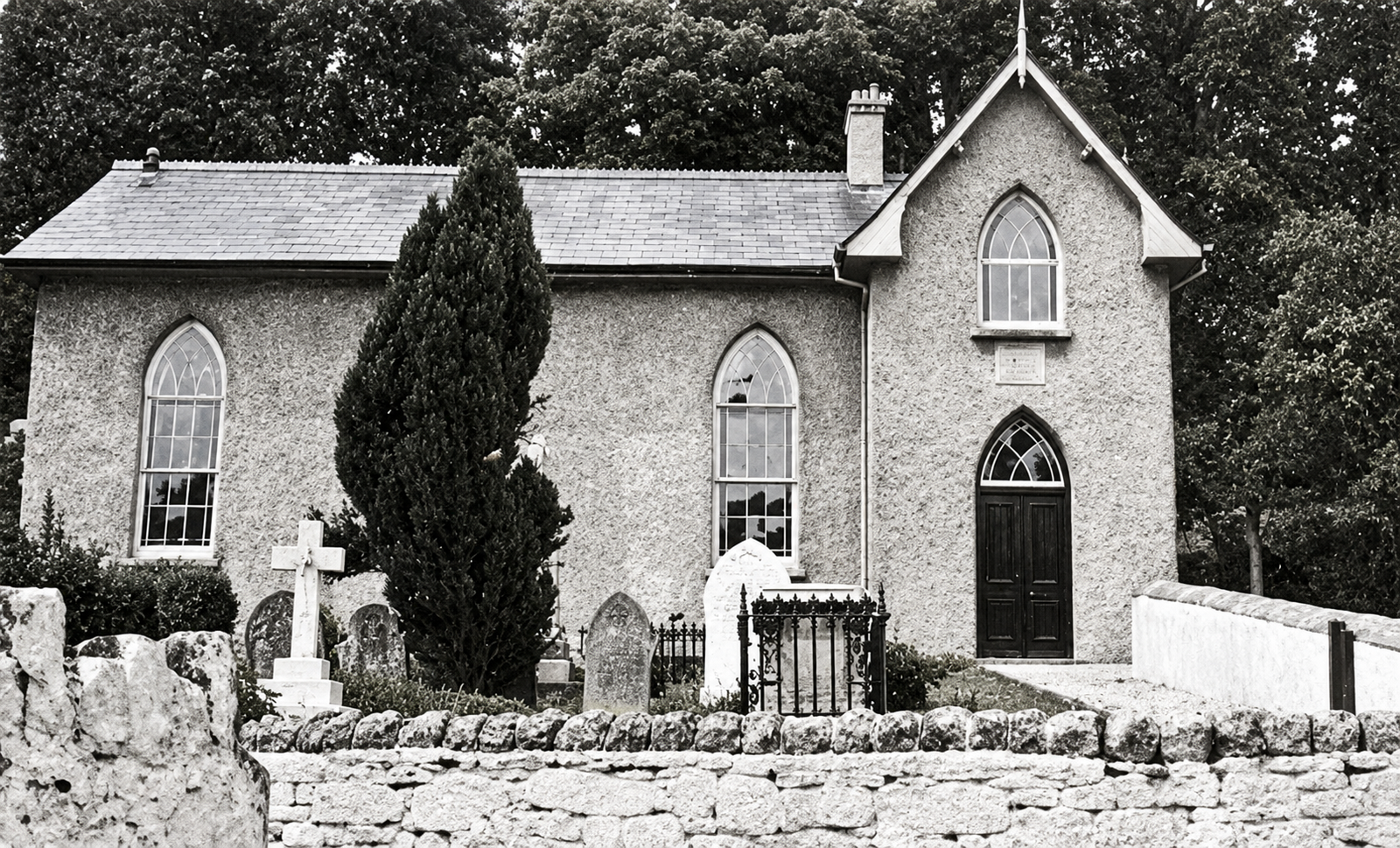
Whitechapel, on the western side of the main road through Llancarfan, was originally built as a Wesleyan Methodist Chapel in the early 19th century. Its arrival reflected the growth of Nonconformist worship in Wales during the 18th and 19th centuries, when Methodist congregations established chapels in villages and rural communities across the country. By the mid-19th century the chapel had become an established part of Llancarfan's village community, standing alongside the ancient parish church of St Cadoc's and the later Baptist chapel at Bethlehem. The chapel and its associated burial ground are shown on the 1840 tithe map and on the first Ordnance Survey maps, confirming its importance within the 19th-century village.
The building is a modest but attractive example of a rural Methodist chapel. Its whitewashed rendered walls, slate roof and tall lancet-arched windows give it the simple appearance from which the name Whitechapel has subsequently become associated with the building. A two-storey projecting entrance section was later added at the northern end, with an arched opening above the entrance. The chapel remained part of Llancarfan's religious life until the Methodist congregation eventually ceased to use the building. It has since been converted into a private residence, but its distinctive form and position remain an important reminder of the period when Llancarfan supported several different Christian congregations. Today, Whitechapel is a listed building and forms an important part of the historic character of the village.