

Please note, the majority of properties on the trail are now private residences,
please respect their privacy.
Llancarfan
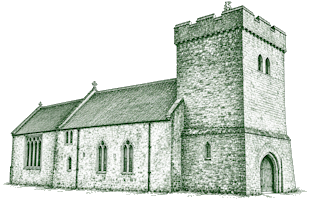
Llancarfan has a history stretching back well over a thousand years, with evidence of settlement in the surrounding valley from prehistoric times, including the substantial Iron Age hillfort at Castle Ditches. The village itself has much earlier Christian origins. A monastic community, traditionally associated with St Cadoc (Cadog), was established here during the 5th or 6th century, probably beside the ford of the Nant Llancarfan. By the early medieval period Llancarfan had become an important ecclesiastical centre, with an abbot and community of monks and canons. Documentary references from the 7th and 10th centuries confirm its importance, while a fragment of a carved pillar cross, dating from the 9th or 10th century, survives as a rare reminder of the pre-Norman Celtic church.
The arrival of the Normans in Glamorgan during the late 11th century brought profound changes. Llancarfan's monastic establishment lost its independence and its lands and tithes were transferred to major English religious houses, including Gloucester and Tewkesbury Abbeys. The medieval church gradually replaced the earlier monastic complex, with significant surviving fabric dating from the 12th to 14th centuries. Over succeeding centuries the village developed around two principal centres: the church and its churchyard, and the former Cross Green, where the river crossing and corn mill encouraged a second cluster of settlement. The Nant Llancarfan subsequently powered corn and woollen mills, while surrounding farms, small industries and historic hamlets such as Llanvithyn shaped the distinctive landscape. Today Llancarfan remains one of the Vale of Glamorgan's best-preserved historic settlements, retaining much of the character created by its medieval origins, agricultural economy and long association with the river valley.